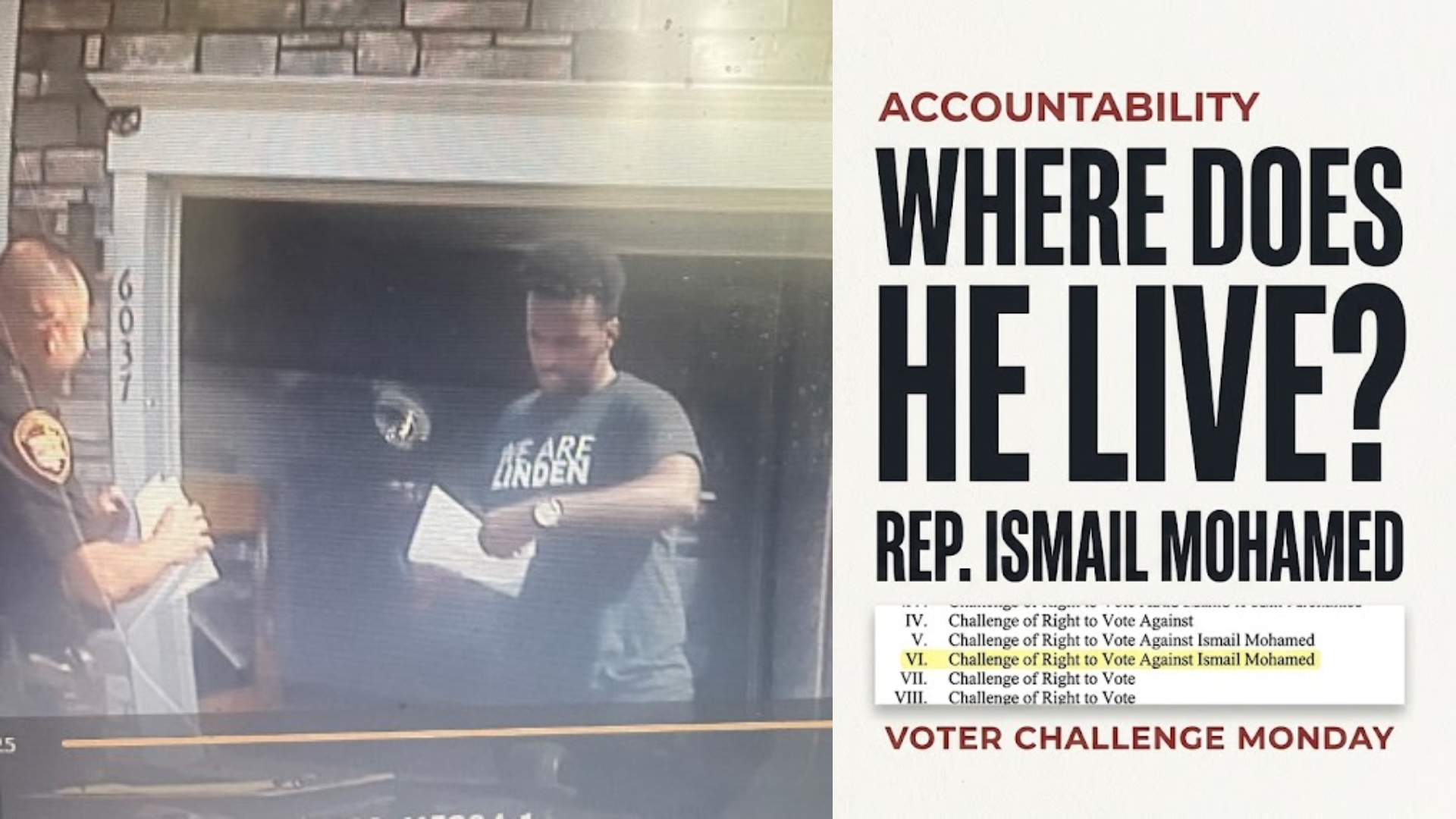
Columbus Wants Real District Representation
A campaign for real district representation clears its first hurdle. Plus: free Columbus State tuition, Central State’s audit, police drones, Medicaid oversight and Trump’s election claims.
By Kin
· Updated
OFF THE TOP
THE LEAD
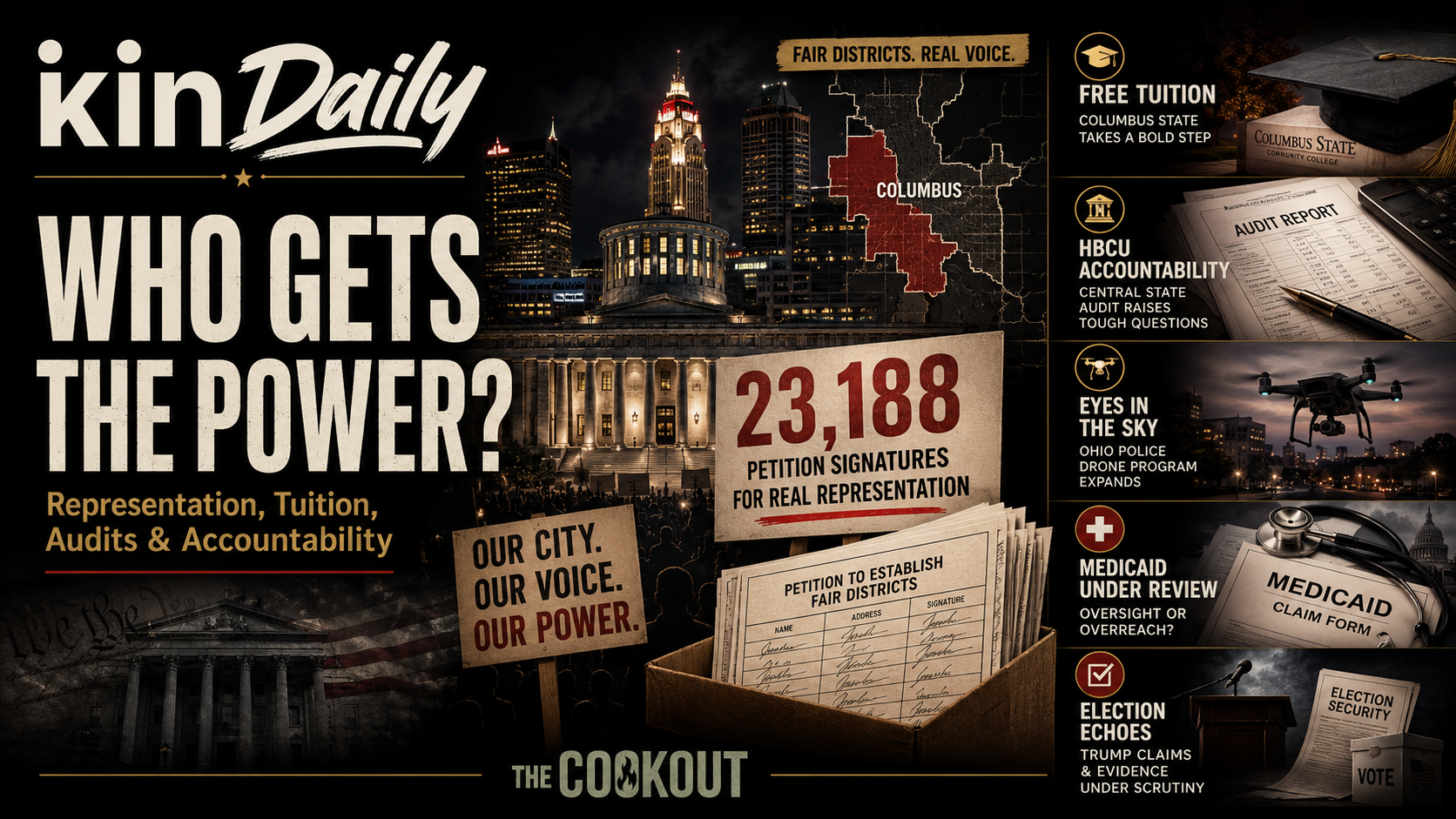
23,188 Signatures Could Force a Vote on Columbus City Council Power

THE DAILY FIVE
Columbus State Wants a 10-Year Levy to Make Tuition Free for New Graduates
Columbus State Community College is preparing a possible November ballot issue that would create tuition-free enrollment for new high-school graduates who live in Franklin County.
The college is considering a 10-year, 1.9-mill levy expected to raise approximately $95 million per year. Its preliminary estimate says the levy would cost homeowners $67 annually for every $100,000 in home value—about $192 per year on a home valued at $288,000.
New graduates would need to enroll within one year of finishing high school and complete the FAFSA. Eligible students of any income level could attend tuition-free for up to six semesters. Other Franklin County residents would receive an estimated tuition reduction of $1,000 per academic year for a full-time course load. The benefits would begin in fall 2027 if voters approve the issue.
The Kin+ read: Free tuition is the headline. The levy is the machinery.
Voters should examine how much money goes directly toward tuition relief, how much supports staffing and facilities, and which outcomes the college will guarantee.
Enrollment is not the finish line.
Completion, employment and earnings are.
Central State’s Former CFO Faces a $105,057 Recovery Finding
Ohio’s auditor issued a finding for recovery of $105,057.10 against Central State University’s former chief financial officer over late pension-system payments.
Auditors said delayed employer contributions and employee payroll withholdings generated penalties and interest that could have been avoided. The finding covers payments due to two state retirement systems between 2021 and 2024. The audit also identified two dozen material weaknesses and deficiencies, while noting that one affiliated foundation failed to provide required records even after a subpoena.
The Kin+ read: Central State is Ohio’s only public HBCU.
That status is a reason for deeper accountability—not less.
Every dollar consumed by late fees, weak controls or preventable administrative failure is a dollar unavailable for students, faculty, facilities and institutional recovery.
Supporting a Black institution means protecting it from neglect inside the institution too.
Ohio’s New Police-Drone Law Creates a Long List of Warrant Exceptions
New Ohio statutes governing police drones take effect October 6.
The law requires a warrant when officers use a drone to enter or observe the interior of a home under circumstances in which a physical search would require judicial approval.
But police may conduct warrantless drone surveillance under several exceptions, including emergencies, traffic enforcement, crime-scene documentation, observation from navigable airspace, suspected criminal activity in public areas and threat assessments before large events.
Agencies must document flight data. Drone surveillance records generally qualify as public records unless another exemption applies, and armed law-enforcement drones are prohibited.
The Kin+ read: The protection is narrow.
The exceptions are broad.
The law says police generally need a warrant to look inside your home. It gives them substantial freedom to watch public spaces, events, traffic and neighborhoods from above.
The next fight is over local policy:
How long will footage be stored?
Will facial recognition be used?
Can footage be shared with ICE?
Will residents know when drones monitor a protest or community event?
The law authorizes the tool.
Local rules will determine how deeply it enters everyday life.
A Columbus Father Faces a Federal Gun Charge After His Toddler’s Death
Federal prosecutors charged a 35-year-old Columbus man with illegally possessing a firearm following the death of his 21-month-old son.
According to the criminal complaint, Columbus police responded to a Quinby Drive home July 11 and found the child suffering from a gunshot wound. Prosecutors allege the father later told police that the toddler found a 9mm handgun inside an open safe. The man has a prior aggravated-burglary conviction and is therefore prohibited from possessing firearms under federal law.
The charge is an allegation. The defendant is presumed innocent unless convicted.
The Kin+ read: The prosecution addresses what happened after an unsecured gun entered a home with a small child.
The public-safety assignment is preventing the next death.
Where are the safe-storage campaigns?
How easily can families obtain gun locks and safes?
What consequences exist before—not only after—a child finds a loaded weapon?
Punishment may establish accountability in one case.
Prevention is the measure of whether the community learned anything from it.
Trump Used a Prime-Time Address to Renew Disproven Election Claims
President Donald Trump used Thursday night’s address to accuse China of interfering in the 2020 election, release previously classified documents and press Congress to adopt stricter voter-identification and proof-of-citizenship rules.
Reuters found that the documents did not establish that China altered votes or election results. A 2021 U.S. intelligence assessment concluded that no foreign actor attempted or succeeded in changing voter registrations, ballots, vote tabulations or results. Some of the documents released Thursday either concerned foreign elections or assessed that large-scale manipulation of U.S. vote totals would be difficult.
Trump nevertheless renewed his support for legislation restricting mail voting and requiring additional identity and citizenship documentation.
The Kin+ read: The speech did not prove that the 2020 result was manipulated.
It used cybersecurity risks, voter-data collection and unrelated intelligence to create the impression that the result itself remains in doubt.
That distinction matters.
A system can possess vulnerabilities without a particular election being stolen.
Foreign governments can collect voter information without changing a single ballot.
The danger is using legitimate security concerns to justify barriers that block legitimate voters.
READ THE RECORD
Ohio Medicaid Oversees $40 Billion. Auditors Found Major Monitoring Gaps.
PULL UP TO THE COOKOUT
Columbus currently requires council members to live in districts—but lets the entire city vote in every district race.
Should each neighborhood elect only its own representative?
Or should council members continue answering to voters citywide?
Pull up and tell us which system creates real accountability—and what safeguards Columbus would need under a true ward model.
WATCH TODAY
What Does the White House Mean by “Radical Left Terrorism”?
The Trump administration convened representatives from more than 60 countries Thursday to launch what it called an international campaign against “radical left terrorism.”
The White House said left-wing political violence should receive the same seriousness used against international jihadist terrorism. Secretary of State Marco Rubio announced plans for additional terrorist designations and visa restrictions.
Today, watch for the definitions and legal authorities.
- Which organizations may be designated?
- What conduct—not ideology—triggers action?
- Could lawful protest groups or political organizations be investigated?
- Will domestic intelligence collection expand?
- What sanctions, visa restrictions or financial controls will follow?
- Will the government distinguish clearly between violence, civil disobedience and protected political speech?
Black civil-rights and liberation movements have repeatedly been described by government agencies as security threats.
That history makes vague political labels dangerous.
The government must prosecute violence based on evidence.
It must not convert political disagreement into a terrorism category.
Independent local reporting takes work.
Join Kin Nation and stay connected to what happens next.