When Columbus Needed Help, the Calls Kept Coming
New records obtained by Kin reveal how Columbus 311 struggled to answer residents after the Aug. 11 storms, firefighters reached the limits of their available resources, and Mayor Andrew Ginther authorized up to $5 million in emergency contracting. But the question of who actually received help — and how long they waited — remains unanswered.
By DaVante Goins
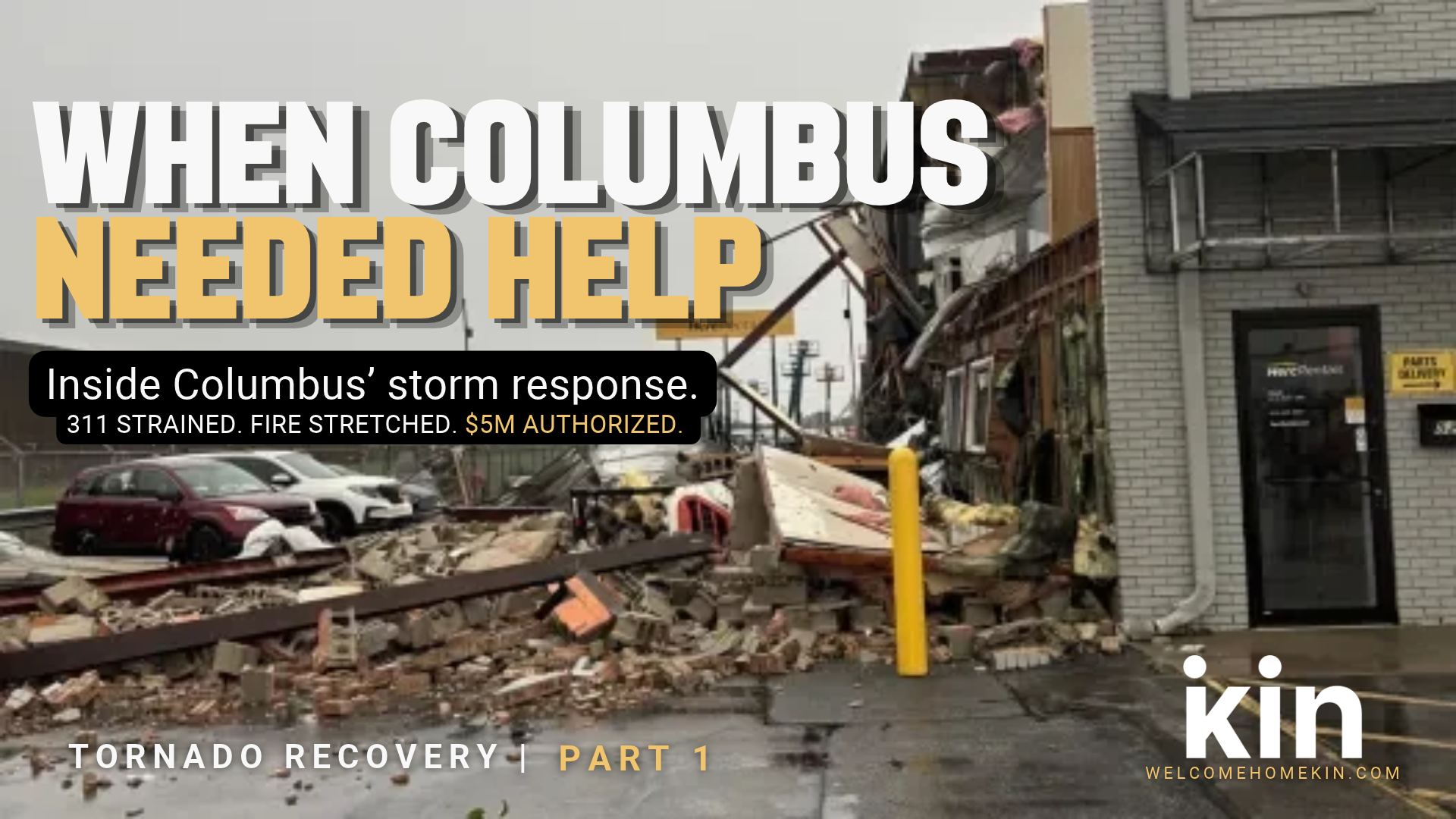
COLUMBUS, Ohio — The top floor of an apartment building was gone.
That's how one property was described in a City of Columbus inspection record following the severe storms that tore through the city on Aug. 11.
Elsewhere, inspectors documented collapsed chimneys, damaged roofs, fallen trees and buildings that could no longer safely be occupied.
In one neighborhood, the damage was immediate and visible. In another, the trouble would linger long after the winds stopped.
And across Columbus, people were trying to reach the City for help.
They called 311.
They reported damage.
They needed trees removed, streets cleared, buildings inspected and services restored.
But two days after the storm, the very system residents relied on to reach their government was answering barely half of the contacts coming in.
New records obtained by Kin show that on Thursday, Aug. 13, Columbus 311 received 1,519 inbound contacts.
Only 765 were answered by an agent.
An answer rate of 50.36 percent.
That wasn't the only part of City government feeling the pressure.
Columbus Fire officials now acknowledge that the sudden increase in emergency incidents pushed the division toward — and at times beyond — its normal operating capacity.
At one point, according to the department, every available Columbus Fire resource was committed to responding to the storm.
And while firefighters were racing from emergency to emergency, Mayor Andrew Ginther was using emergency procurement authority to help City departments secure contractors for damaged infrastructure.
The administration would ultimately authorize up to $5 million in emergency contracting.
Meanwhile, City emails show officials were exploring help from a national disaster-response organization for homeowners who could not afford to remove fallen trees from their properties.
Nearly three weeks later, residents in Southern Orchards were still asking when their streetlights would come back on.
The question Kin set out to answer was simple:
When Columbus needed help, could its government meet the demand?
After weeks of public-records requests, the City has begun providing some answers.
And those answers tell a story much bigger than a single tornado.
A Storm That Left More Than Fallen Trees
The National Weather Service confirmed that an EF1 tornado struck South Columbus on Aug. 11, producing estimated peak winds of 100 mph along a path approximately 1.8 miles long.
The tornado damaged homes and businesses, uprooted trees and moved through areas around Parsons Avenue, Hinman Avenue, Barack Park, South Champion Avenue and Reeb Avenue.
Another EF1 tornado, with estimated winds of 90 mph, struck Olde Towne East.
The damage was not limited to those tornado paths. Powerful straight-line winds affected other parts of Columbus and Franklin County as well.
And when the storms moved out, the work was just beginning.
Records released by the City's Department of Building and Zoning Services show the scale of the structural damage officials were trying to assess.
A spreadsheet provided to Kin contains 172 inspection entries associated with the storm.
Among those entries, 31 were classified as "Posted Unsafe."
Those figures represent entries in the City's records, not necessarily 172 distinct properties or 31 separate unsafe buildings. Some properties appear more than once.
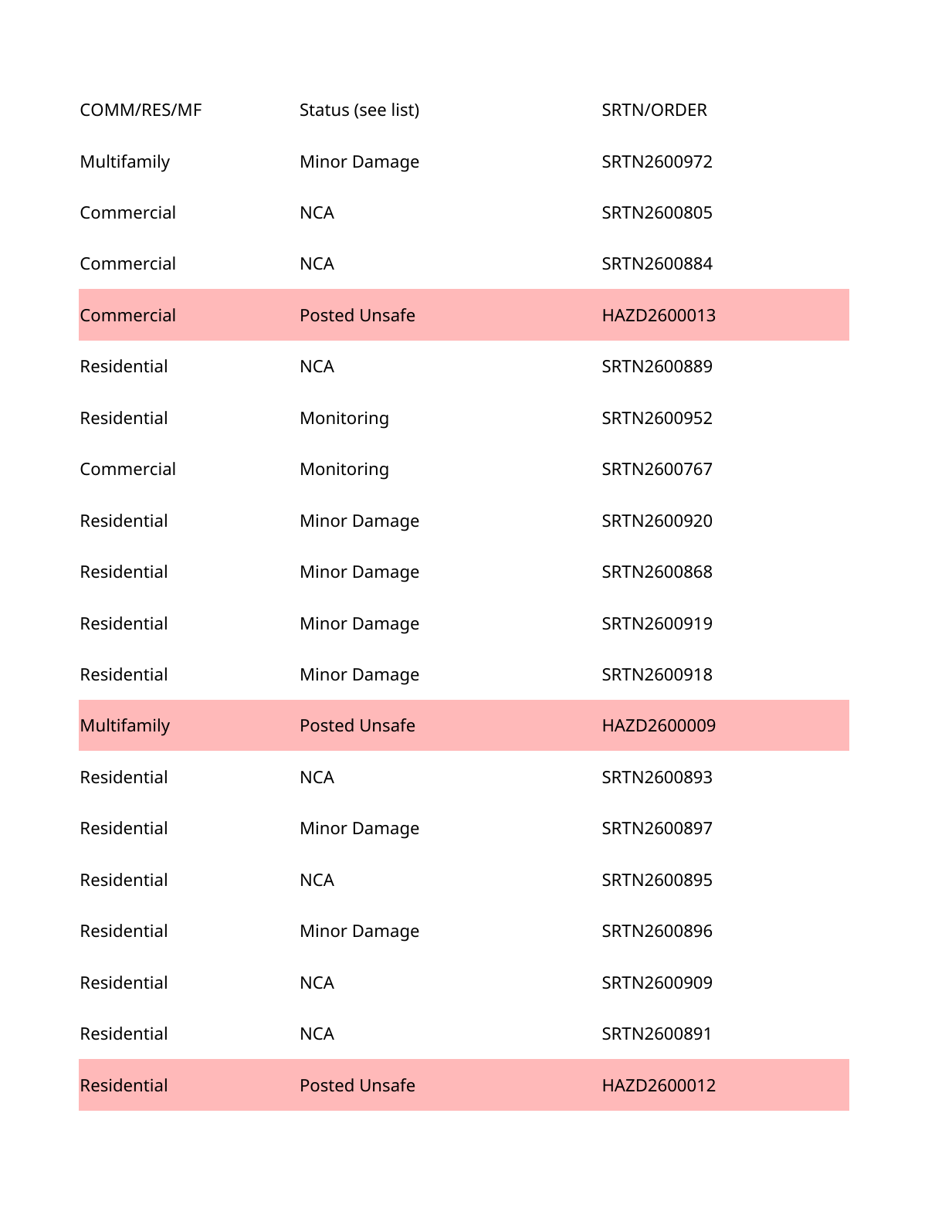
The descriptions, however, leave little doubt about the destruction inspectors were encountering.
One South Champion Avenue apartment building was described as having lost its top floor.
Another record described a collapsed chimney and side wall.
An inspector documented a roof missing from a property on Hinman Avenue.
Other entries described damage to churches, homes, garages and multifamily properties.
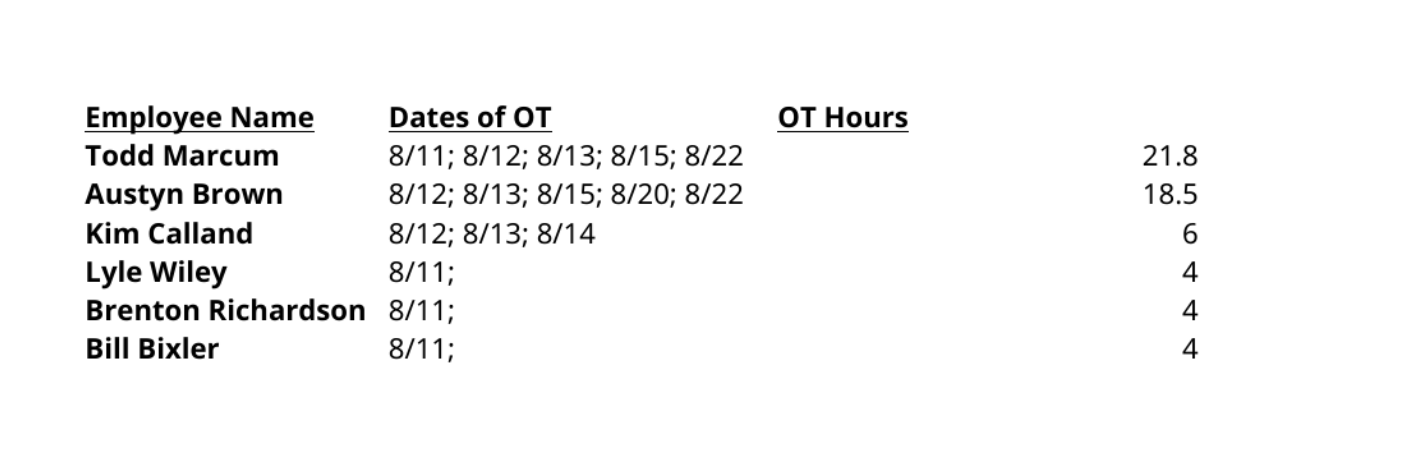
The City's records also show Building and Zoning staff logged 58.3 hours of storm-related overtime, including initial assessments around Hinman and Parsons avenues, surveys in Olde Towne East, individual inspections, and administrative work.
The department says additional inspection reports, photographs, building orders and permit records require more time to assemble.
It does not maintain a separate report identifying which storm-related inspection cases were unresolved after 30 days.
That leaves an important question open.
An inspection can tell us whether a building was damaged.
But what happens to the people who cannot safely live or work inside it?
And how does the City track what happens next?
The First Warning Was in the Numbers
Before the storms, Columbus 311 had been answering roughly eight out of every 10 inbound contacts.
Between July 1 and Aug. 9, the system recorded 31,860 inbound contacts.
Of those, 26,347 were answered.
The answer rate was 82.7 percent.
Then came Aug. 11.
That day, 311 received 1,817 inbound contacts.
It answered 1,221.
The answer rate fell to 67.2 percent.
The system also recorded 467 abandoned contacts, 110 short-abandoned contacts and 19 voicemails.
On Aug. 12, the system received another 1,431 contacts.
Its answer rate improved slightly to 70.3 percent.
Then came Aug. 13.
Of the 1,519 inbound contacts recorded that day:
- 765 were answered.
- 390 were classified as abandoned.
- 97 were classified as short-abandoned.
- 258 were classified as missed.
- Nine went to voicemail.
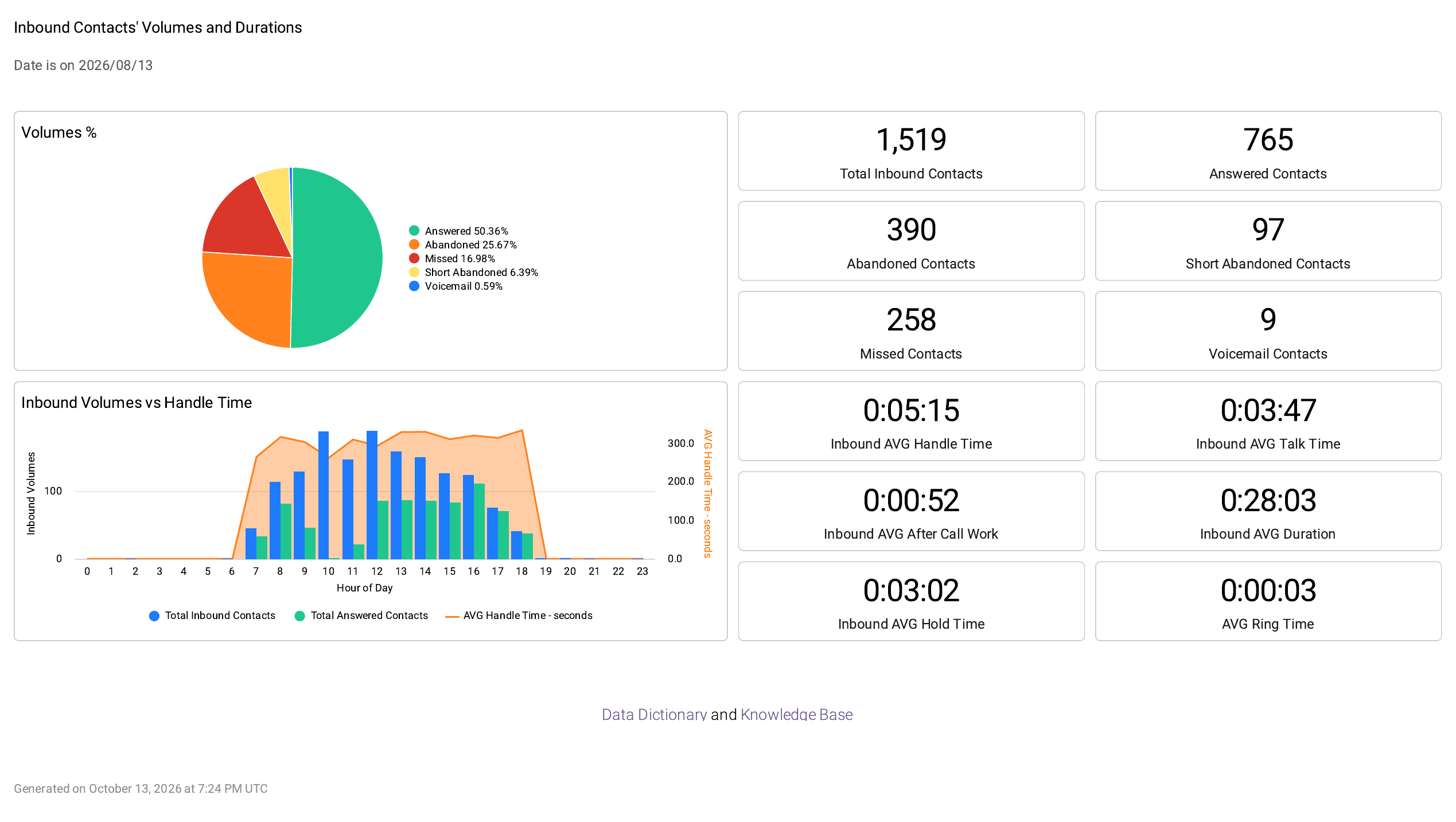
In all, 754 contacts were not recorded as answered by an agent.
Those categories matter. A missed contact is not necessarily the same as a resident being left on hold. An abandoned contact does not establish whether the caller eventually received assistance through another channel.
Kin has requested clarification from Columbus about how each category is defined.
But the overall answer-rate decline is clear.
“The answer rate had fallen from 82.7 percent during the pre-storm comparison period to just 50.36 percent on Aug. 13.”
And the pressure didn't disappear when the weather cleared.
By Monday, Aug. 17, 311 was still receiving an elevated volume of contacts.
That day, the system recorded 1,708 inbound contacts.
Only 1,136 were answered.
Another 474 were classified as abandoned.
The abandonment rate reached 27.75 percent.
During the July 1-Aug. 9 comparison period, it had been 10.66 percent.
Across Aug. 10 through Aug. 17, Columbus 311 recorded 9,185 inbound contacts.
Only 6,112 — approximately two-thirds — were recorded as answered by an agent.
These are contacts, not necessarily unique residents or service requests. One person could have called more than once, and the call-center data does not include every digital service request submitted through the City's other channels.
Still, the picture is unmistakable.
The storm increased demand.
And 311's answer rate deteriorated.
Could Columbus Add Enough People to Answer?
That is one of the questions the records have yet to fully answer.
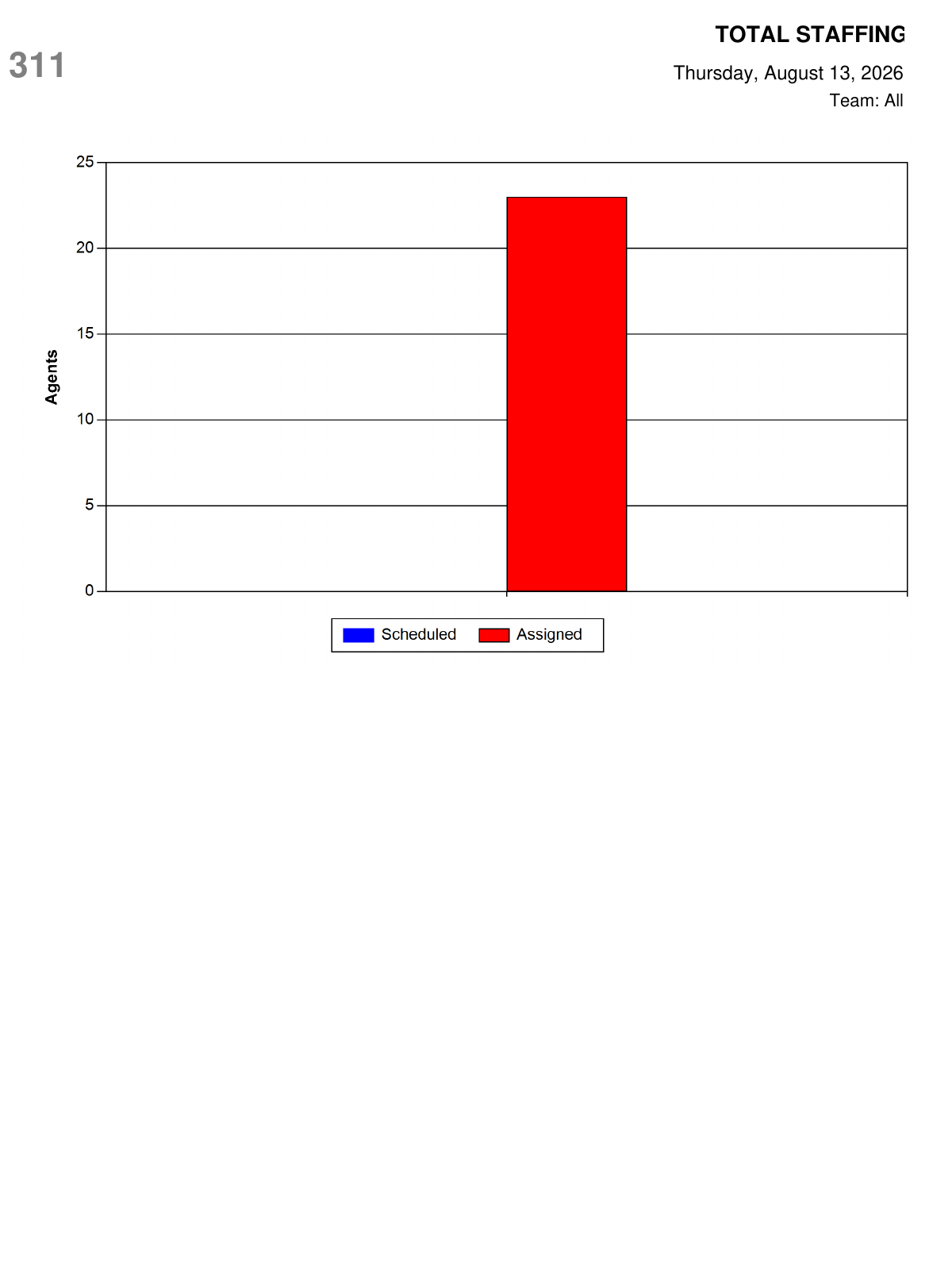
Columbus produced staffing reports showing approximately two dozen agents assigned on the weekdays surrounding the storm.
The reports list:
- Aug. 10: 24 assigned agents.
- Aug. 11: 25 assigned agents.
- Aug. 12: 22 assigned agents.
- Aug. 13: 23 assigned agents.
- Aug. 14: 24 assigned agents.
- Aug. 17: 24 assigned agents.
Another report lists 995.59 assigned staff hours from Aug. 10 through Aug. 17.
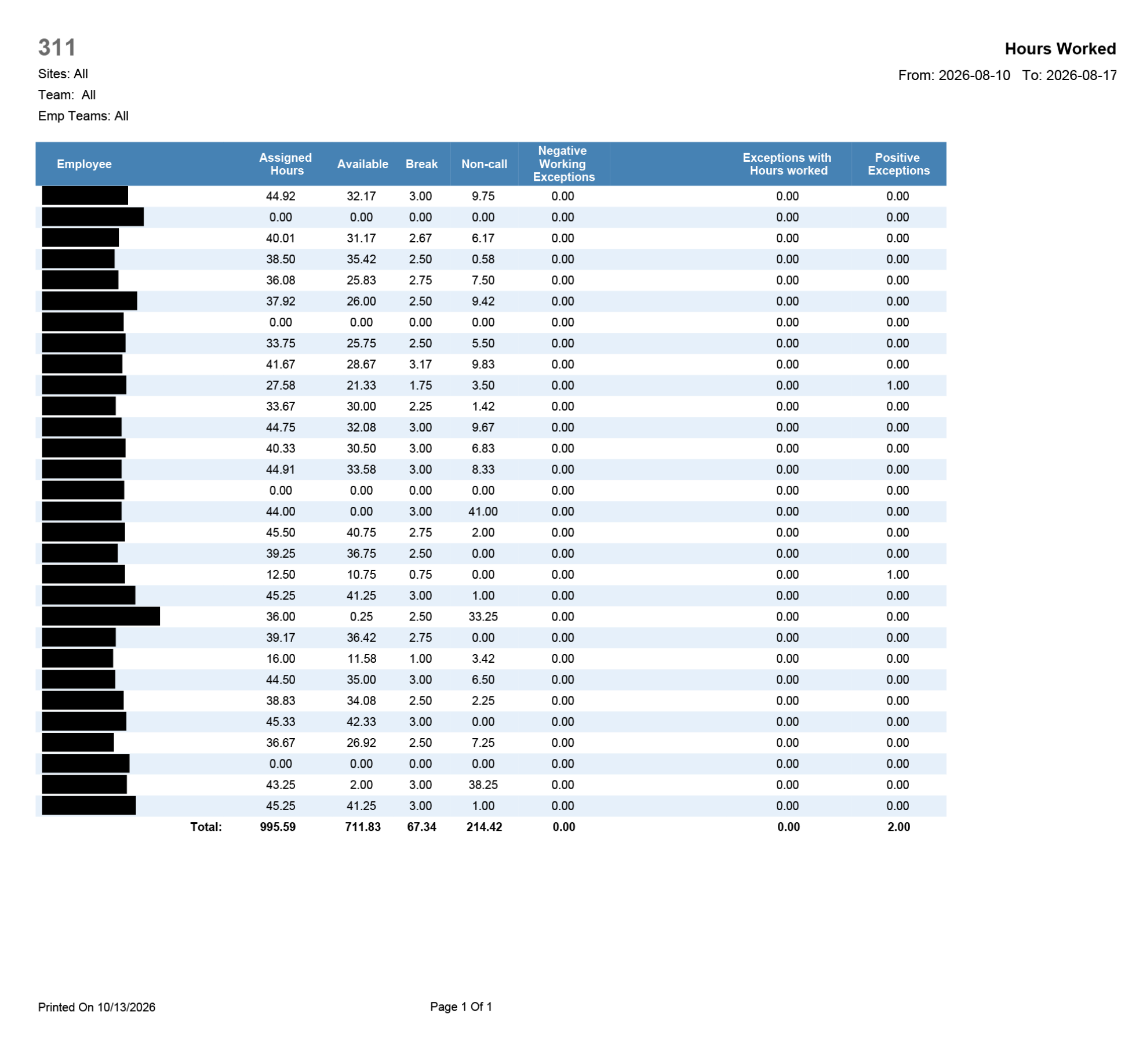
Those numbers do not, on their face, show an obvious major increase in assigned personnel corresponding to the surge in demand.
But they also do not establish that the City failed to add capacity.
The records do not yet fully explain what "assigned" means, how staffing changed within individual shifts, whether workers were reassigned from other departments or how much overtime was used.
Kin has asked for those explanations.
What the records do establish is that the system experienced a measurable decline in its ability to answer incoming contacts.
And when residents are calling their government because something has gone wrong, those unanswered contacts deserve scrutiny.
Because the first step in receiving help is being able to ask for it.
Firefighters Faced a Different Kind of Overload
While 311 was struggling with demand, the City's emergency responders were confronting a more immediate problem.
There were more emergencies than the normal operating system was designed to handle at once.
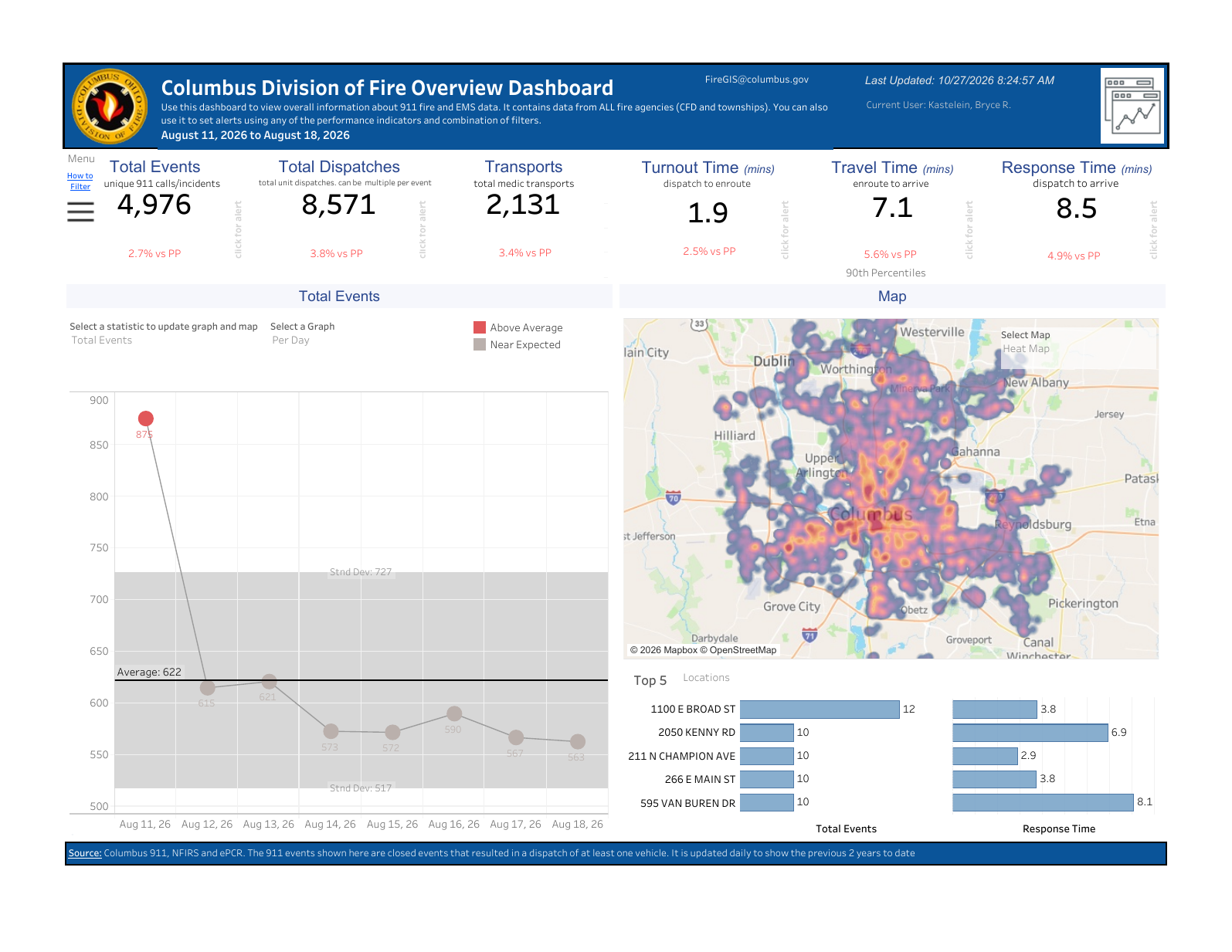
In written responses provided to Kin on Oct. 29, Columbus Fire officials described a dramatic increase in calls involving downed power lines, damaged structures, fallen trees and debris striking homes, vehicles and other buildings.
The division said incident demand exceeded its typical daily operating levels.
Its written response described more than 1,000 incidents, compared with a normal range of approximately 550 to 650 per day.
Separately produced Fire dashboard reports use a narrower count of completed incidents involving a dispatched unit, showing 875 events within City boundaries on Aug. 11 and 929 across the broader reporting area. Those dashboard figures are not directly interchangeable with the incident volume described in the department's written response.
But the most revealing part of Fire's account wasn't just the number of calls.
It was what happened to the available resources.
“At one point, all CFD resources were committed to storm-related incidents.”
The division said many of the calls involved high-risk emergencies, including rescues, fires and serious accidents requiring multiple fire apparatus.
As demand surged, battalion chiefs activated a rarely used system known as Area Command.
The approach allowed Fire officials to coordinate incidents across geographic areas, prioritize the most urgent emergencies and avoid sending available apparatus unnecessarily across the city.
It was a departure from normal dispatching procedures, made necessary by the extraordinary conditions.
The department said mutual aid was difficult to obtain during much of the storm because surrounding communities were also dealing with increased emergency demand.
Fire records provided to Kin identify 67 overtime hours across nine listed personnel assignments involving additional emergency medical staffing, other operational staffing and support for Team Rubicon.
Those records represent the specific assignments itemized in the production, not necessarily the total cost or total overtime for every aspect of the Fire response.
The division says it is now developing new severe-storm response procedures, including a Severe Storm Mode platform and plans to increase staffing ahead of forecasted events.
Columbus Police described a different experience.
According to the Department of Public Safety, police primarily assisted with evacuations and traffic control.
Police officials said Aug. 11 call volume appeared to remain within their typical daily range of approximately 1,200 to 1,500 calls for service.
They reported no known extraordinary overtime or mutual-aid needs and no identified capacity constraints.
The contrast matters.
Not every part of Columbus government experienced the storm the same way.
Police say they remained within normal operating capacity.
Fire says its resources were stretched to the limit.
And 311 records show its ability to answer contacts deteriorated significantly.
That distinction is important if Columbus intends to understand where its emergency-response systems worked — and where they need to improve.
What Did the Mayor's Emergency Actually Do?
While City workers were responding to the damage, Mayor Andrew Ginther announced that Columbus would use emergency authority to accelerate the response.
For weeks, Kin sought to understand precisely what that meant.
Was the City under one broad emergency declaration?
What did the Mayor authorize?
Which departments used the authority?
And how much money was involved?
The Mayor's Office has now provided a clearer explanation.
According to the administration, Ginther's emergency action was intended to allow departments to enter into necessary contracts outside the City's standard procurement process when existing contracts or normal procedures could not address urgent storm-related needs quickly enough.
When the Mayor announced his intention to use that authority, departments were still assessing their needs.
Some already had contracts in place.
Others could issue purchase orders through their existing arrangements.
And two departments determined that they needed additional emergency contracting authority.
Those departments were Columbus Water & Power and Columbus Recreation and Parks.
“Ultimately, only two departments identified urgent needs that required the use of emergency procurement authority.”
That was the explanation provided by the Mayor's Office in its Oct. 20 response to Kin.
The administration said all other departments handled their storm-related work through existing contracts and purchase orders.
The two emergency actions authorized contracts totaling as much as $5 million.
But there is an important distinction.
Authorized spending is not the same thing as actual spending.
Kin has requested the underlying contracts, invoices, payment records and financial records necessary to determine how much the City ultimately committed and paid.
Those records are still needed to complete the financial accounting.
$2.5 Million to Repair the City's Power Network
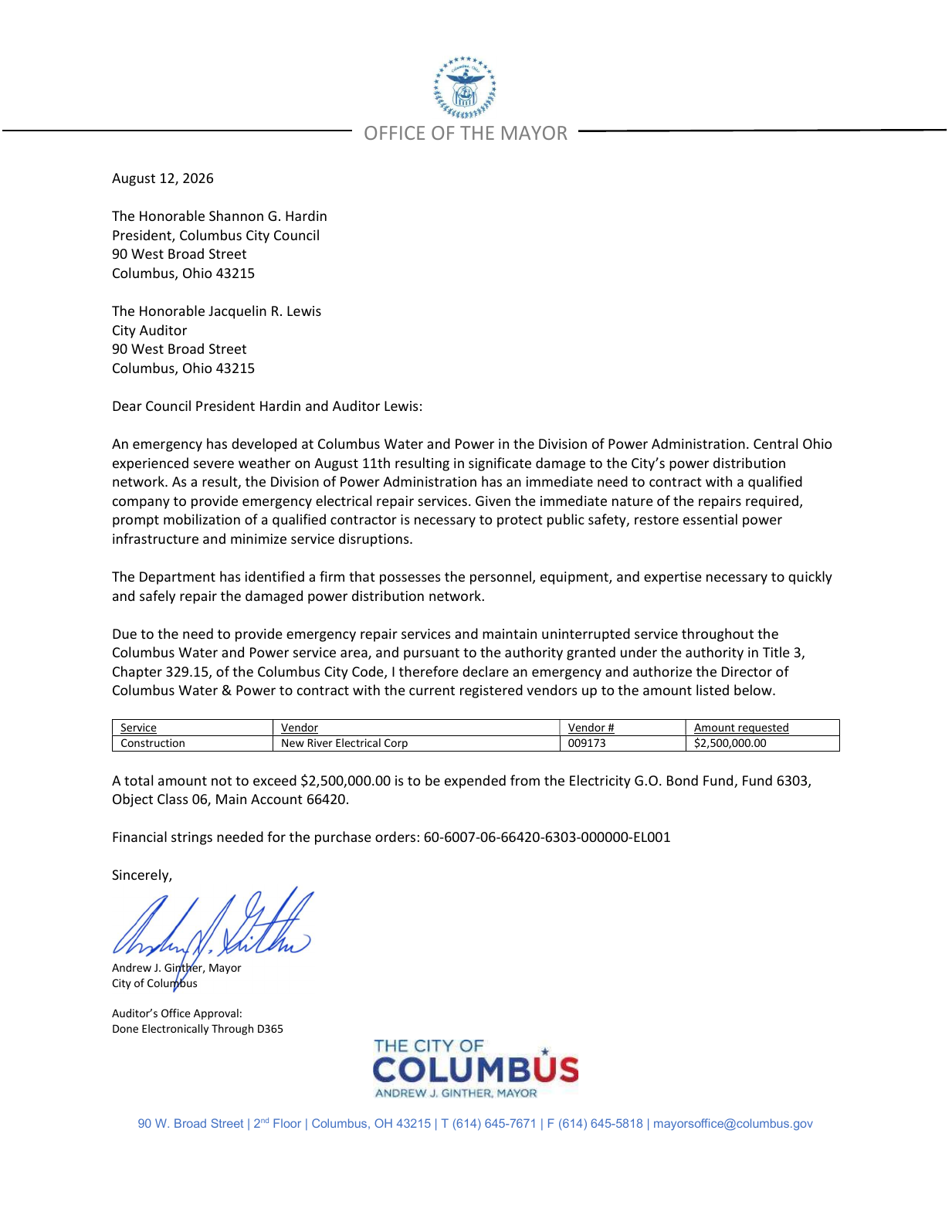
On Aug. 12, Ginther signed an emergency letter regarding the Division of Columbus Water & Power.
The document stated that the Aug. 11 storms caused significant damage to the City's electrical distribution network.
The department needed a qualified contractor to begin emergency repairs.
The Mayor authorized Water & Power to contract with New River Electrical Corp. for up to $2.5 million under Columbus City Code 329.15.
The authorization identified the City's Electricity G.O. Bond Fund as the funding source.
It was an extraordinary contracting measure intended to allow repairs to move more quickly.
But Kin is still seeking the records needed to determine exactly what work New River Electrical performed, how much was paid and how long the repairs took.
And while the emergency contracting authority was intended to accelerate restoration, some residents were still dealing with the consequences weeks later.
In Southern Orchards, the Lights Were Still Out
On Aug. 31, nearly three weeks after the storm, residents in Southern Orchards were still trying to find out when their streetlights would return.
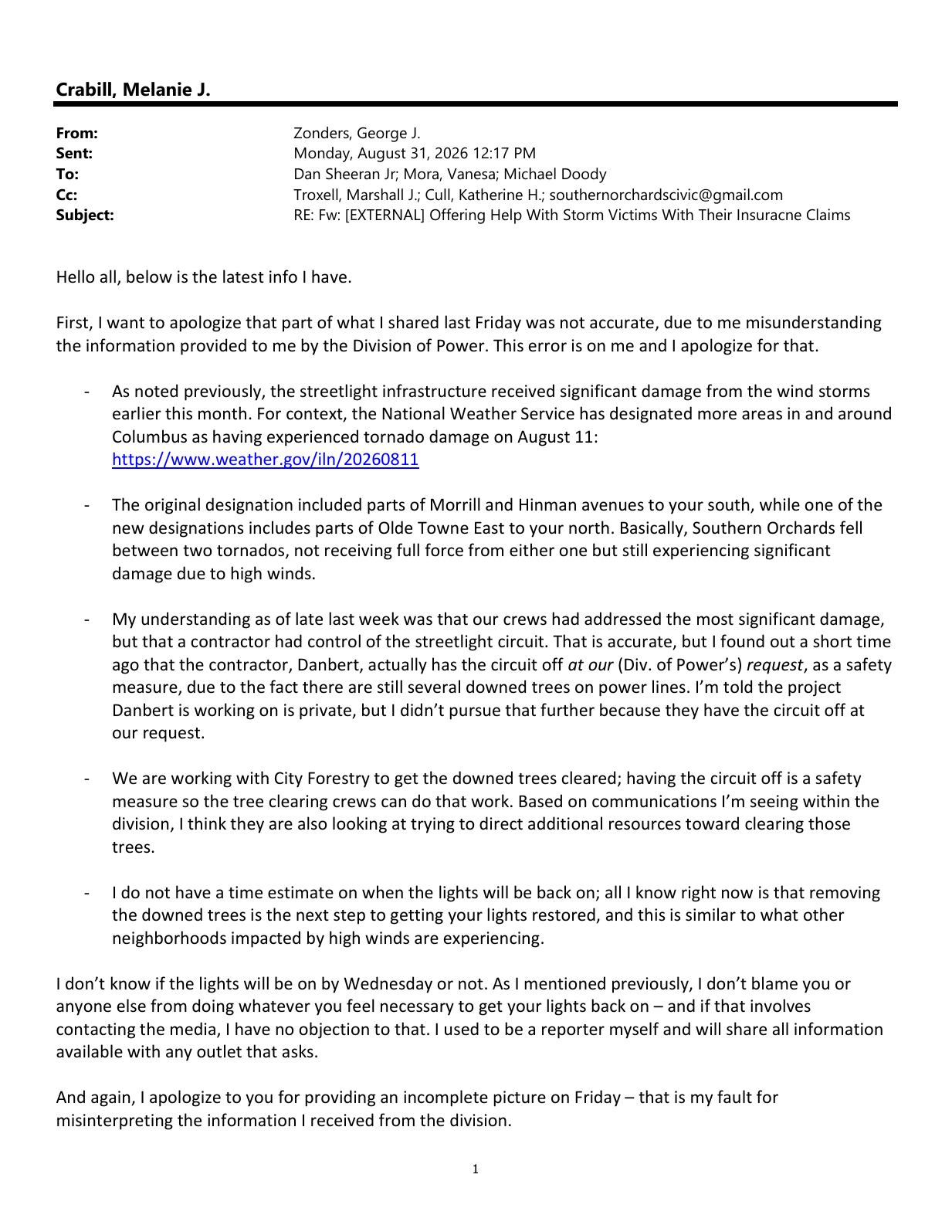
City correspondence obtained by Kin shows that George Zonders, a Columbus Water & Power spokesperson, wrote to residents and City officials about the continuing outage.
Zonders acknowledged that information he had previously provided was incomplete and explained that the streetlight circuit had been shut down at the Division of Power's request.
The reason was safety.
Trees were still down on electrical lines.
City Forestry needed to clear them before the circuit could be safely restored.
And Zonders could not provide a restoration date.
“I do not have a time estimate on when the lights will be back on.”
Residents were concerned about more than darkness.
The email chain included reports of near crashes involving pedestrians and vehicles.
One resident openly questioned whether a similar prolonged outage would have been tolerated in German Village or Clintonville.
That is an allegation about unequal treatment, not a finding established by the records.
Kin has not obtained evidence showing that Southern Orchards received slower service because of the neighborhood's demographics or economic circumstances.
But it is a question the City should be able to answer with data.
When repairs are prioritized, what determines who goes first?
What happens when one department is waiting on another?
And how does the City track a problem that remains unresolved weeks after the initial emergency?
The Southern Orchards emails also described a resident dealing with damage to her roof, garage and vehicles after a tree fell.
She reportedly needed assistance navigating the insurance claims process.
Another individual offered to help residents understand their claims.
That is part of recovery, too.
Not just removing the tree.
But figuring out who pays for the damage.
Who helps the homeowner.
And what happens when residents do not have the money or insurance coverage needed to put everything back together.
The $5 Million Problem at Barack Community Center
The second emergency contracting authorization involved Columbus Recreation and Parks.
An Aug. 29 letter described significant damage to four City facilities:
- Barack Community Center.
- Busch Park.
- Berliner Sports Park.
- Fran Ryan Center.
The most severe damage described in the records involved Barack Community Center.
The City reported that approximately 75 percent of the gymnasium roof had been lost.
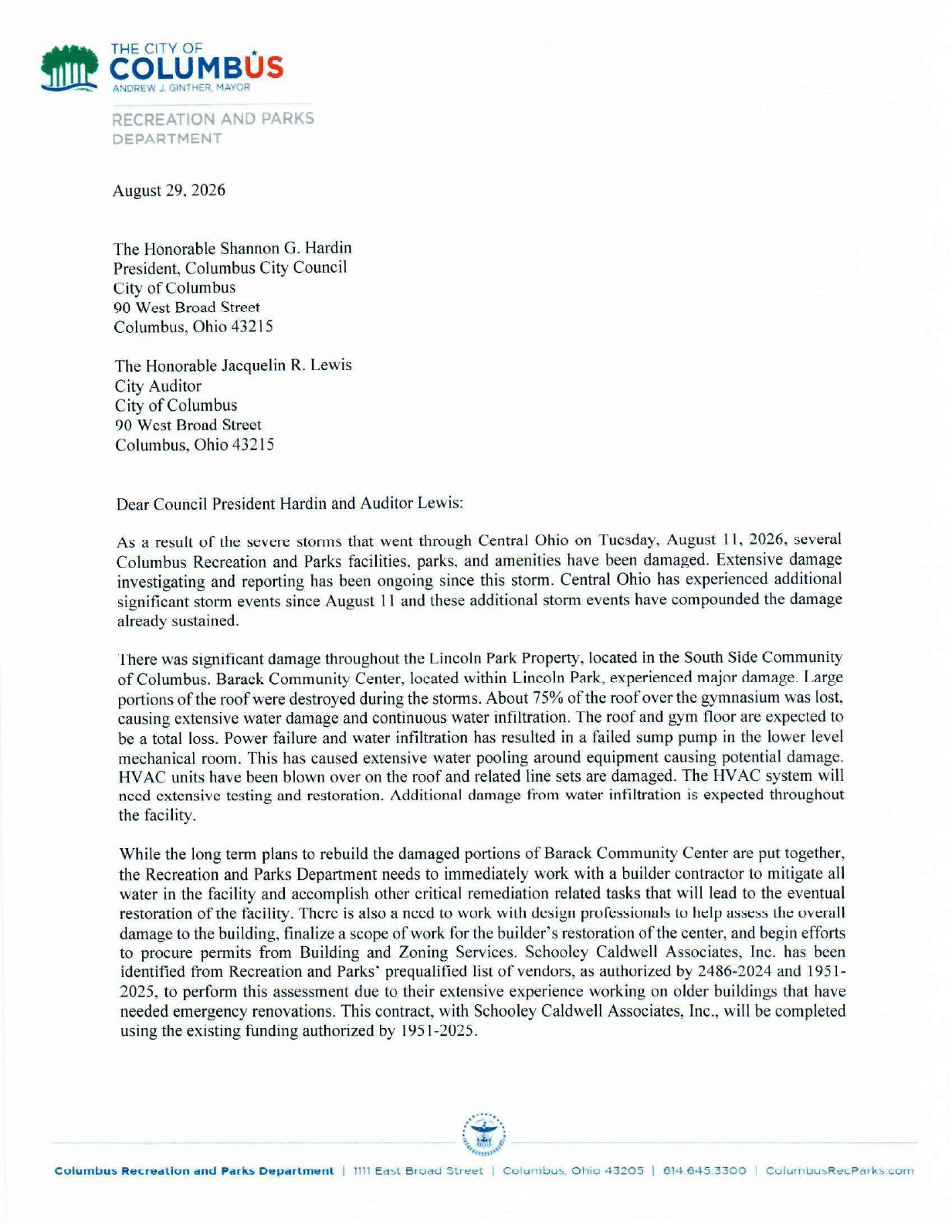
Water entered the building.
A sump pump failed during the power outage.
Heating and cooling equipment was damaged.
And the department expected extensive damage to the gymnasium and other parts of the facility.
Contractor 2K General provided an early rough-order estimate of approximately $5 million to restore the facility.
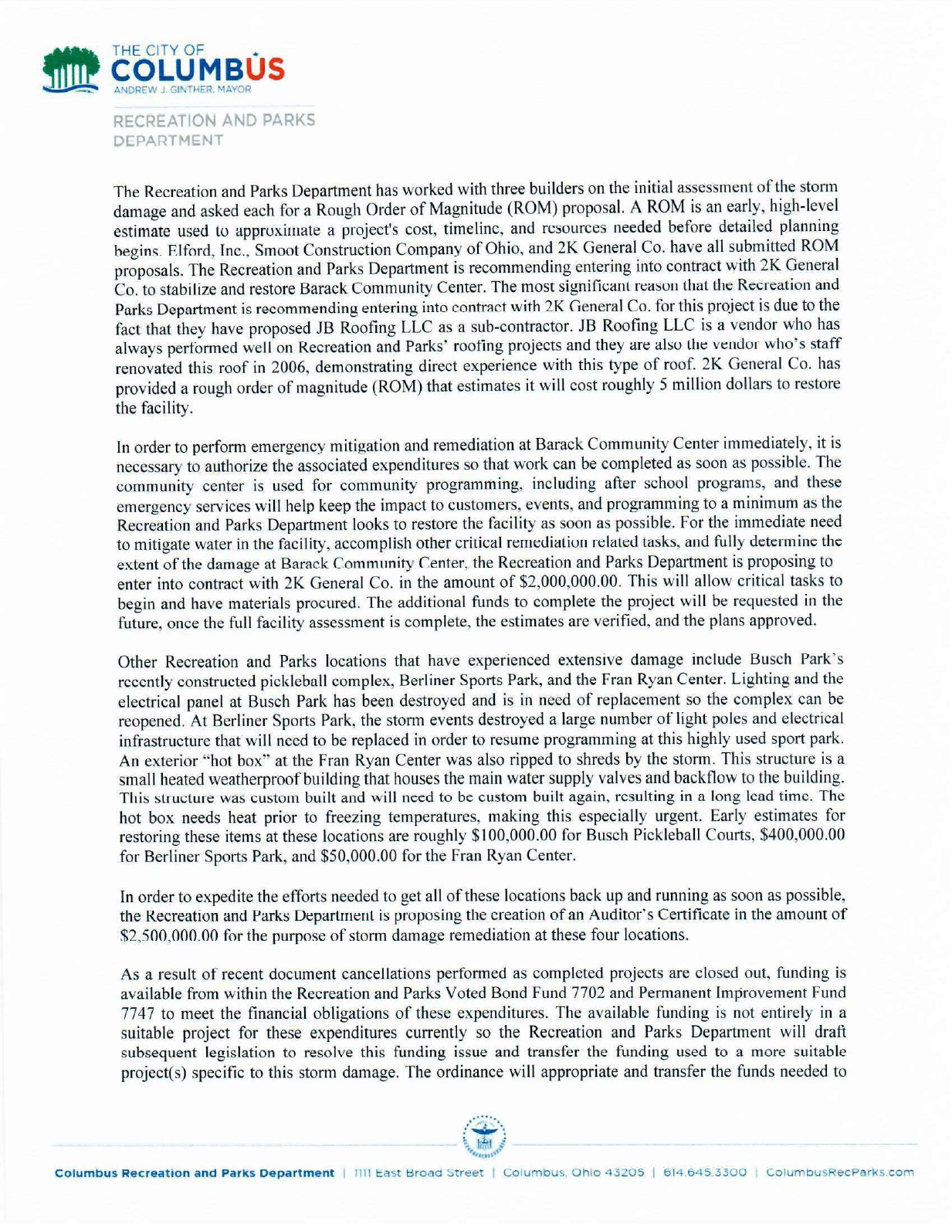
The department proposed an initial emergency contract of approximately $2 million with 2K General to begin mitigation and critical repairs.
Other preliminary estimates included roughly $100,000 for Busch Park, $400,000 for Berliner Sports Park and $50,000 for Fran Ryan Center.
The overall emergency procurement authorization was up to $2.5 million.
The early restoration estimate for Barack Community Center alone was roughly twice that amount.
Kin has requested the contracts, invoices, final damage assessments and updated repair and reopening timelines.
Those records will be important in determining how much the storm ultimately cost the City — and how long residents went without access to affected public facilities.
Outside Help, and the 311 List That Could Lead It There
There was another conversation happening inside City government just two days after the storm.
On Aug. 13, Katherine Cull, an assistant director in Columbus' Division of Community Engagement, emailed City officials after speaking with Team Rubicon, a national disaster-response organization.
The subject was storm relief.
Cull explained that Team Rubicon could potentially help residents remove downed trees and debris from private property at no cost to homeowners.
That could be especially important for residents who were uninsured, underinsured, low-income or older.
But the organization needed information.
Specifically, it wanted to know where residents needed help.
And one possible source was the City's 311 system.
“They have asked if we can provide a list of 311 reports for downed trees on private property, including addresses.”
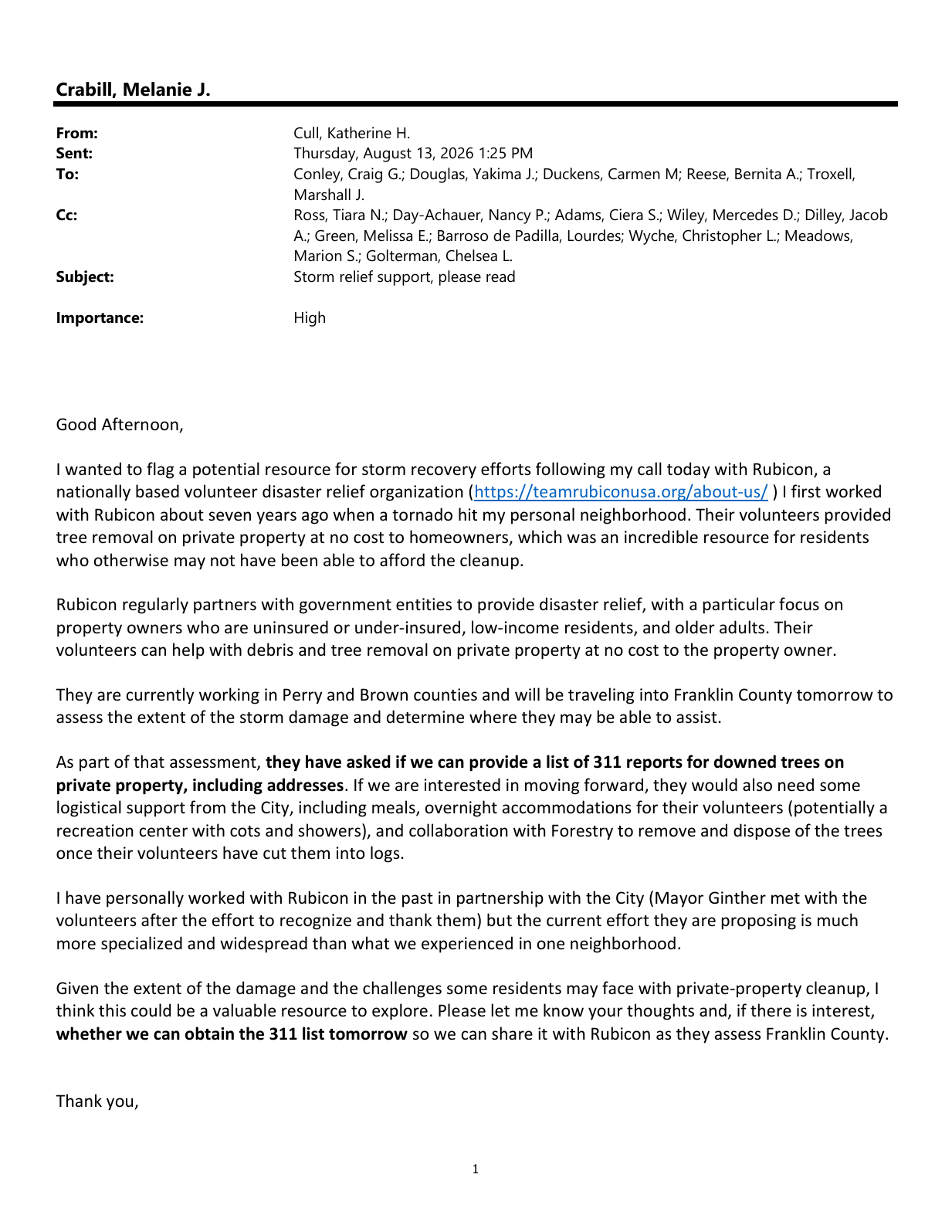
The email also discussed potential logistical support from Columbus, including meals, overnight accommodations, showers and help from Forestry to dispose of cut trees.
The Mayor's Office later told Kin that City Council may have more information about the relationship because Council initiated the partnership.
Newly released Columbus Fire records provide additional evidence that the relationship advanced beyond the initial conversation.
On Aug. 17, Fire support personnel recorded time spent arranging access for Team Rubicon.
The division also documented issuing 10 temporary identification cards for Team Rubicon access, at a total cost of $50.
Those records establish operational coordination.
They do not, however, establish how many homeowners actually received assistance.
That remains one of the most important unanswered questions.
How many residents were referred?
Where were they located?
How many properties received assistance?
And did the residents who needed help most actually get it?
Those are questions Kin is continuing to pursue with the City, City Council and Team Rubicon.
What the Records Reveal — and What They Don't
There is a temptation after any major storm to judge government's performance by what officials announce.
An emergency has been declared.
Crews have been deployed.
Contractors have been hired.
Additional resources are available.
And then attention moves elsewhere.
But those announcements tell only part of the story.
The records released to Kin so far show:
- Columbus 311's answer rate fell sharply as residents sought assistance after the storm.
- On Aug. 13, only 50.36 percent of inbound 311 contacts were recorded as answered by an agent.
- Columbus Fire says the volume and severity of emergency calls strained its normal response capacity, requiring changes to command and deployment procedures.
- Building and Zoning records contain 172 storm-related inspection entries, including 31 marked "Posted Unsafe."
- The Mayor used emergency procurement authority for two departments, authorizing up to $5 million in contracting.
- City officials coordinated with Team Rubicon as they explored private-property cleanup assistance for residents.
- Nearly three weeks after the storm, Southern Orchards residents were still dealing with a streetlight outage connected to downed trees and damaged electrical infrastructure.
Those are documented findings.
They do not mean the City failed at everything.
Fire officials described successfully implementing Area Command during a period of extraordinary demand.
Police reported operating without unusual capacity constraints.
City departments performed inspections, arranged emergency repairs and coordinated with outside responders.
But the records also reveal places where ordinary systems came under extraordinary pressure.
And much of the information needed to determine how effectively those systems served residents is still missing.
Kin continues to await the underlying 311 service-request data, including neighborhood locations, request categories, departmental assignments, completion dates and unresolved cases.
Financial records are also needed to establish how much was actually spent, not merely authorized.
Columbus Public Health is processing Kin's request for Incident Command records, which could explain how response priorities were set and how resources were distributed.
Additional records remain outstanding from other City departments.
The work of obtaining and reviewing those records continues.
The Question That Comes Next
There is one reason this investigation cannot end with an answer rate, an emergency letter or a contractor's name.
The people affected by the storm did not experience recovery as a spreadsheet.
They experienced it at home.
On the block.
At the community center.
On the street where the lights were out.
In the hours spent waiting for help.
And sometimes in the money they had to find to repair what the storm destroyed.
A City can answer every question about how many contracts it approved and still leave residents wondering why their particular problem was never resolved.
That is why Kin's next reporting will follow the requests themselves.
We want to know:
- Which neighborhoods needed the most help?
- What were residents asking the City to do?
- How long did it take departments to respond?
- Which requests were resolved within days, and which remained open after 30 days?
- Where did outside assistance go?
- And did response times differ depending on where people lived?
Those answers will help determine whether Columbus' response reached the people who needed it most.
Because declaring an emergency is one thing.
Managing one is another.
And for the resident standing beneath a damaged roof, staring down a dark street or waiting for someone to return a call, the measure of government is not simply whether it had the authority to act.
It is whether help actually arrived.
About This Investigation
This is Part One of Kin's continuing examination of the City of Columbus' response to the Aug. 11, 2026 severe-weather event.
The reporting is based on public records and written responses provided to Kin by Columbus 311, the Mayor's Office, Columbus Fire, Public Safety, Building and Zoning Services, and other City sources. Kin also reviewed National Weather Service storm surveys and internal City correspondence.
Call-center contacts are not equivalent to unique callers or individual service requests. The staffing figures require additional explanation from the City, and emergency contracting authorizations should not be interpreted as final expenditures.
The Fire division's written incident-volume estimate and its dispatch dashboard use figures that are not directly interchangeable. The dashboard counts closed incidents involving at least one dispatched unit and provides differing geographic filters.
Building and Zoning inspection counts refer to entries in the records produced, rather than necessarily distinct properties.
Kin will continue reviewing records as they are produced and publish additional findings as they can be verified.
- Columbus Ohio
- Columbus Tornado
- August 11 Storms
- Columbus 311
- Andrew Ginther
- Columbus Storm Recovery
- Columbus Fire Division
- Columbus Public Safety
- Emergency Declaration
- Emergency Spending
- Public Records
- Investigative Journalism
- Southern Orchards
- Barack Community Center
- Columbus Water and Power
- Columbus Recreation and Parks
- Team Rubicon
- Severe Weather
- Storm Damage
- Government Accountability
- Kin Investigation
Independent local reporting takes work.
Join Kin Nation and stay connected to what happens next.